How to Start a Small Business from Home: Complete Guide
Starting a small business from home is a great way to become your own boss. This idea requires minimal investment in one’s capabilities. Although you’ll spend time brainstorming and ironing out essential aspects of your business concept, such as choosing the right location, you will find that the process is not as intimidating as it may seem.
There is a complete guide to help you through the major steps to take when launching your own venture, eliminating the possibility of making some of the most common mistakes in the process.
More: Check Business Ideas with Ai
Quick summary
| Topic | Details |
| Best For | Beginners, students, parents, freelancers, and side hustlers |
| Average Startup Cost | $0–$5,000+ depending on the business |
| Time to Launch | 1 day to 4 weeks |
| Skills Required | Basic computer and communication skills |
| Work Location | Home or anywhere with internet access |
| Earning Potential | Varies by business type, experience, and demand |
| Risk Level | Low to Medium |
| Best Business Models | Service-based, online, digital products, eCommerce |
Key Takeaways
- Think of a business that fits your skills and budget
- Test your business idea before you invest all of your money
- Think of what the customer needs.
- Make sure to have a simple business plan and budget
- Register your business if you need to
- Set up a professional website and social media accounts from the beginning
- And focus on getting your first few customers.
Why Start a Small Business from Home?
Many successful businesses were started in the creator’s spare room, garage, and sometimes even in the kitchen! They provide many benefits to the aspiring entrepreneur looking to make a life for themselves.
Main benefits:
- Less risk/cost to start
- Flexible hours
- Work/Life balance
- No commute
- Test business ideas
- Grow the business into something full-time
- Work anywhere you have an internet connection
Is Home Based Business Right For You?
Consider these factors when deciding what type of business you would like to own.
- What are your skills
- Decide on a budget you can comfortably manage.
- how much time you are willing to put into it,
- Decide what your business will offer.
- Would you like to work at home or out,
- What problems are you willing to address for your customer?
After considering these factors, you should be able to make a short list of possible businesses you can run from your home.
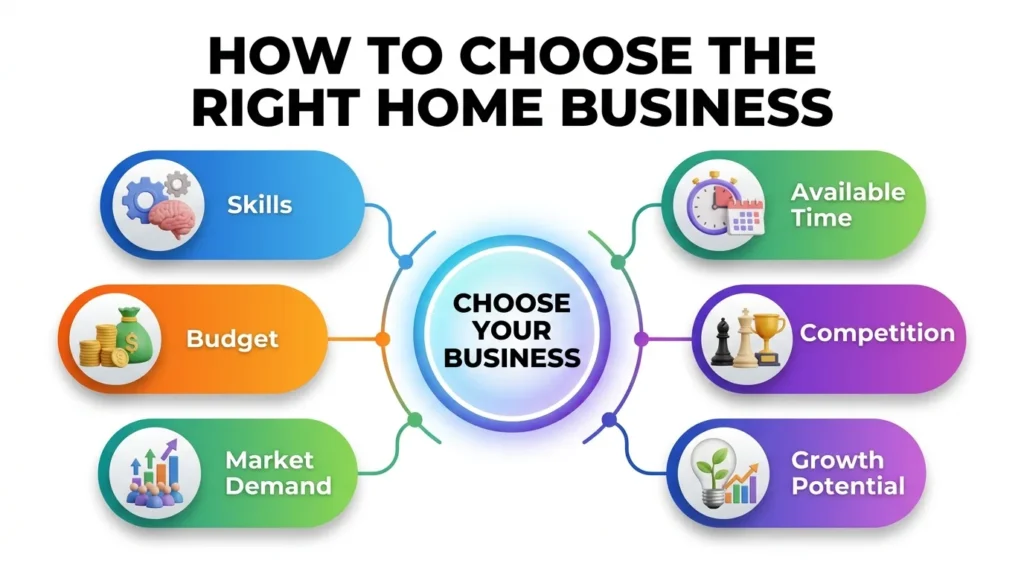
How to Choose the Right Home Business
The most suitable business is one that meets the needs, skills, budget, and time constraints of the owner.
More: Ai Business Adviser
Factors to Consider
| Factor | Why It Matters |
| Skills | You can start faster using existing skills. |
| Budget | Prevents overspending in the beginning. |
| Market Demand | Customers must already need your product or service. |
| Competition | High competition is acceptable if you offer unique value. |
| Time Available | Some businesses require daily attention, while others are more flexible. |
| Growth Potential | Choose a business that can expand over time. |
Step-by-Step Guide to Starting a Small Business from Home
Step 1: Picking A Business Idea
All companies have an end goal of solving a problem. The question shouldn’t be “What business should I go into?” but rather “What problem should I solve?” There are many options when it comes to a business idea, such as:
- Writing,
- Graphic design,
- Online tutoring,
- Virtual assistant,
- Or even selling homemade goods.
Only pick one type of business to focus on, rather than multitasking by starting multiple businesses.
Step 2: Market Research
Before investing any money, it is important to make sure that there is a market for the business being planned.
Research:
- Customer needs
- Popular competitors
- Average prices
- Customer reviews
- Market trends
Useful research methods include:
- Google Search
- Google Trends
- Reddit discussions
- Facebook Groups
- Amazon reviews
- YouTube comments
Look for repeated customer complaints. These often reveal business opportunities.
Step 3: Identify Your Target Audience
Trying to sell to everyone usually leads to poor results.
Instead, define your ideal customer.
| Question | Example |
| Age | 25–40 |
| Gender | Male or Female |
| Location | Local or Worldwide |
| Occupation | Students, parents, professionals |
| Income Level | Middle income |
| Main Problem | Needs affordable services |
| Buying Behavior | Shops online frequently |
Step 4: Validate Your Business Idea
Validation reduces the risk of building something people do not want.
Simple validation methods include:
- Ask potential customers for feedback.
- Create a landing page.
- Post your idea on social media.
- Offer pre-orders.
- Sell to your first five customers before expanding.
Early feedback often saves both time and money.
Step 5: Write a Simple Business Plan
| Section | What to Include |
| Business Idea | What you sell |
| Target Market | Who you serve |
| Products or Services | Your offer |
| Pricing | How much do you charge |
| Marketing Plan | How customers will find you |
| Startup Costs | Expected expenses |
| Monthly Expenses | Running costs |
| Income Goal | Realistic revenue target |
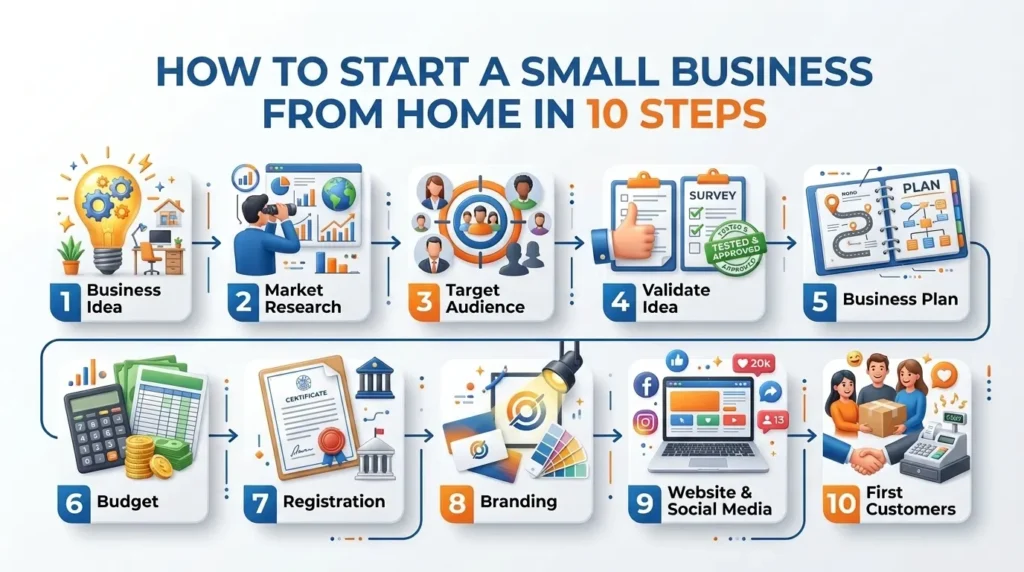
Step 6: Decide Your Budget
Example Startup Budget
| Expense | Estimated Cost |
| Domain Name | $10–20/year |
| Website Hosting | $30–120/year |
| Logo | Free–$100 |
| Business Registration | Varies by country |
| Marketing | $0–300 |
| Equipment | Depends on the business |
You do not need expensive equipment when starting. Buy only what helps you serve your first customers.
More: 25 Best Online Business Ideas for Students Without Investment
Step 7: Register Your Business
Registration requirements depend on your country, state, or local authority.
Common tasks include:
- Choosing a business name
- Registering the business
- Applying for licenses if required
- Understanding tax liabilities
- Opening a business bank account
Make sure you satisfy the terms specified by the local authorities when dealing with payments.
Step 8: Create Your Brand
Having a recognizable brand will facilitate the process of creating awareness about your business.
Focus on:
- Business name
- Logo
- Brand colors
- Fonts
- Professional email address
- Clear value proposition
Use the same brand style on your website and social media pages.
Step 9: Build Your Online Presence
Create a professional online presence so customers can easily find and trust your business. Start with:
- A simple website
- A Google Business Profile (for local businesses)
- Social media accounts where your audience is active
More: Idea for Small Business: 50 Profitable Business Ideas to Start in 2026
Step 10: Finding the First Customers
You do not need have a following of thousands before selling your first product/service
Below are some beginner’s approaches that can be used:
- Asking for referrals from family members and friends
- Engaging in community building
- Posting informative content on social media
- Making an offer for a limited-time launch
- Networking with other business owners in the locality
- Developing a Google business profile
- Asking for testimonials from your initial buyers
- Making the right pitch rather than rushing the sales.
Legal Requirements for a Home Business
Legal requirements change depending on your location and the type of your business.
Common Requirements
| Requirement | Needed For |
| Business Registration | Most businesses |
| Business License | Some industries |
| Sales Tax Registration | Product-based businesses |
| Insurance | Recommended for many businesses |
| Business Bank Account | Separating personal and business finances |
| Contracts | Service-based businesses |
Research the rules in your country before launching.
More: 30 Best Small Business Ideas for Housewives to Start from Home
Estimated Startup Costs by Business Type
| Business Type | Estimated Cost |
| Freelancing | $0–300 |
| Blogging | $50–300 |
| Affiliate Marketing | $50–300 |
| Online Store | $300–3,000 |
| Handmade Products | $100–2,000 |
| Virtual Assistant | $0–200 |
| Online Coaching | $50–500 |
| Print-on-Demand | $50–300 |
Bear in mind that the expenses connected to the work can vary from one case to another, depending on what tools, equipment, and marketing budget you have at your disposal.
Most Profitable Home Business Ideas for Beginners
The most promising home business ideas do not exist; everything depends on what skills, resources, efforts, and money you are ready to invest in it. Some of the following concepts can be developed with zero capital, while others require time and equipment. The table below is provided for a better understanding and comparison of the characteristics of various business ideas.
More: Top 10 Profitable Small Business Ideas You Can Start Today
Home Business Ideas Comparison
| Business Idea | Startup Cost | Difficulty | Income Potential | Best For |
| Freelance Writing | Low | Easy | Medium to High | Writers |
| Graphic Design | Low | Medium | High | Designers |
| Virtual Assistant | Low | Easy | Medium | Organized people |
| Social Media Management | Low | Medium | High | Marketing enthusiasts |
| Online Tutoring | Low | Easy | Medium to High | Teachers |
| Blogging | Low | Medium | Long-term | Content creators |
| Affiliate Marketing | Low | Medium | Long-term | Website owners |
| Print-on-Demand | Low | Easy | Medium | Creative people |
| Handmade Crafts | Medium | Easy | Medium | Artists |
| Dropshipping | Medium | Medium | Medium | Online sellers |
More: 50 Best Work From Home Business Ideas to Make Money
Best Online Home Businesses
| Business | Startup Cost | Income Timeline | Best For |
| Blogging | Low | Long-term | Content creators |
| Affiliate Marketing | Low | Long-term | Website owners |
| YouTube Channel | Low | Long-term | Video creators |
| Online Courses | Medium | Medium-term | Teachers & experts |
| Print-on-Demand | Low | Medium-term | Designers & artists |
| Dropshipping | Medium | Medium-term | Beginners |
| eBooks | Low | Medium-term | Writers |
| Digital Templates | Low | Medium-term | Designers & professionals |
| Etsy Shop | Low | Medium-term | Handmade & creative sellers |
| Shopify Store | Medium | Medium-term | Online retailers |
How to Market Your Home Business
Starting your own business is only half the battle; in order to truly make money, one must get the word out about their venture. The secret to a profitable marketing campaign on a small budget is simple: having a basic marketing plan will help advertise a business without having to spend too much money.
Make Your Site Professional Looking
The website is the face of any company on the internet and, as such, should be easy to navigate and look professional.
Essential pages include:
- Home
- About
- Products or Services
- Pricing (if applicable)
- Contact
- Frequently Asked Questions (FAQ)
- Privacy Policy
- Terms and Conditions
Each page should clearly explain:
- What you offer
- Who your products or services are for
- Why customers should choose your business
- Creating Trust and Facilitating Interaction with Customers
- How customers can contact you
- How to place an order or request a quote
A good website that is customer-friendly facilitates developing relationships of trust and attracting new clients in order to sell the products/services of the company.
Optimize for Search Engines(SEO)
SEO can make the company’s web page show up on Google searches for businesses like the one that the company offers.
- Basic SEO Checklist
- Use keywords
- Make sure your content is valuable
- Optimize page titles.
- Make your website mobile-friendly.
- Add internal links.
Beginner-Friendly SEO Content Ideas
- How-to guides
- FAQs
- Product comparisons
- Case studies
Publishing helpful content consistently can increase your visibility over time.
Use Social Media Wisely
| Platform | Best For |
| Local businesses and communities | |
| Handmade products, fashion, food | |
| Professional services and consulting | |
| DIY, crafts, recipes, home décor | |
| YouTube | Tutorials and product demonstrations |
| TikTok | Short educational or entertaining videos |
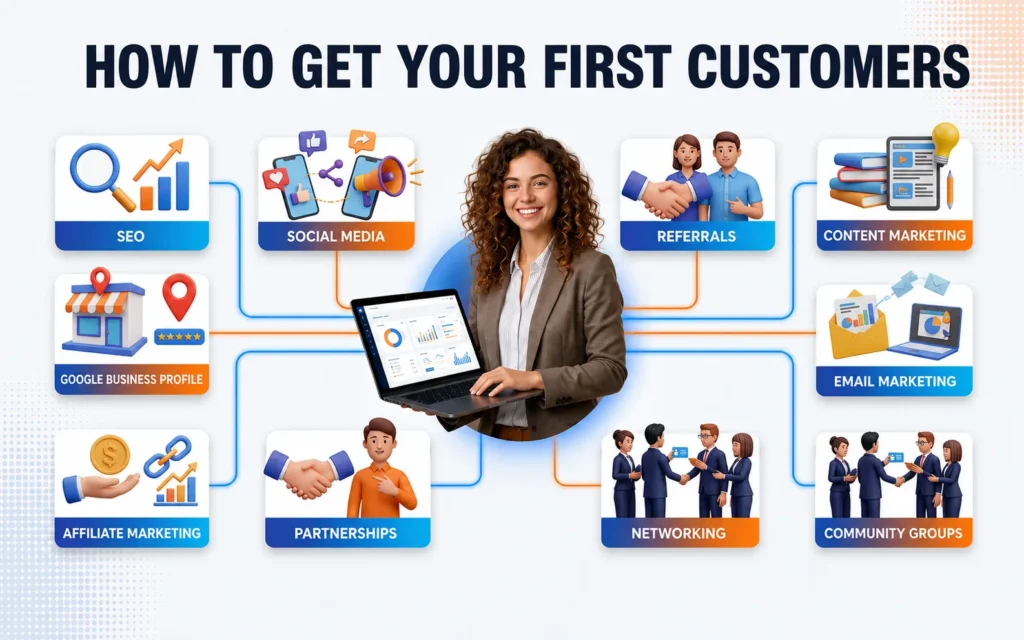
Get Your First Customers
The process of attracting the first customers is usually the most difficult one. Thus, it is necessary to find cost-effective and less resource-intensive ways to build trust.
Practical Approaches to Acquiring Customers
- Inform your friends and family
- About your venture;
- Request referrals from your first clients;
- Network in your community;
- Launch a discount campaign for first-time buyers;
- Post useful articles and videos to your social media accounts;
- Engage with online forums and groups;
- Seek partnerships with other companies.
Building Trust with Customers
- Make sure to have a professional email address,
- Answer all questions promptly,
- Post customer testimonials,
- Provide high-quality images and/or videos of your products/services,
- Be transparent about your prices,
- And strive to offer excellent customer support and meet all commitments.
Manage Your Business Finances
Keeping your finances organized makes it easier to understand your business performance. Best Practices
- Separate business and personal finances.
- Track every expense.
- Record all income.
- Save money for taxes.
- Review your monthly profit.
- Reinvest part of your earnings into growth.
Simple bookkeeping from the beginning can prevent problems later.
30-Day Home Business Launch Checklist
Here is an example of how to use the 4P’s of marketing to write a marketing plan for a new business:
Week 1: Research
- Brainstorm a successful business idea
- Conduct a competitor analysis
- Identify your ideal customers and understand their needs.
- Validate an idea’s viability in the marketplace
Week 2: Plan
- Develop a business plan
- Establish a pricing model
- Register a business (if applicable) and create a budget
3rd Week : Prepare
- Set up a website or social media accounts
- Produce products or services
- Designate and prepare payment platforms
4th Week : Promote
- Launch a product/service
- Use free marketing tactics
- Begin collecting reviews and feedback
- Measure sales growth
Common Mistakes to Avoid
Many beginners make the same mistakes. Avoiding them can save time and money.
| Mistake | Better Approach |
| Starting without research | Validate your idea first. |
| Spending too much | Buy only what you need. |
| Ignoring marketing | Promote your business consistently. |
| Trying to serve everyone | Focus on a clear target audience. |
| Setting prices too low | Price based on value and costs. |
| Giving up too early | Give your business time to grow. |
| Ignoring customer feedback | Use feedback to improve. |
| Skipping legal requirements | Follow local regulations. |
Pro Tips for Long-Term Success
- Start small and make steady progress
- Make sure to do everything as a priority to impress your customers
- Measure everything
- Keep learning new skills
- Build an email list from the start
Even the tiniest improvements made regularly create great results
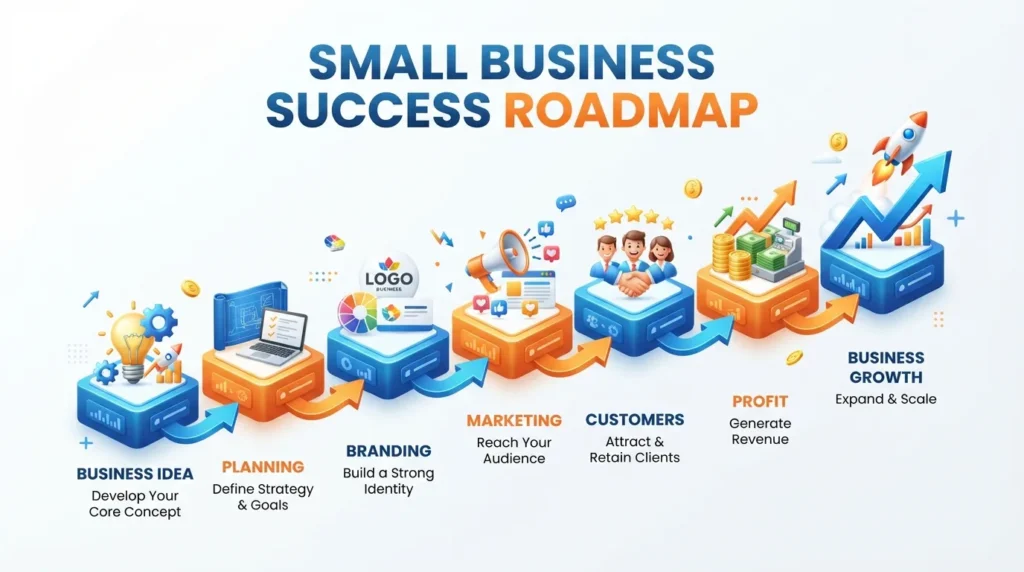
Conclusion
A small business located at one’s home does not necessarily require significant investments and experience. The critical success factors include idea selection, validation of interest, development of a simple plan, and high-quality customer care. It is essential to focus on the consistent improvement of a business and measure progress rather than pursue rapid growth and results. Therefore, a small home business can be highly profitable if the right idea is chosen, monitored, and adjusted.
FAQs
1. Is it possible to begin a small business from home with no money?
It is possible to begin a small business from the comfort of one’s own home with little to no money because many service-style businesses, such as writers, social media managers, tutors, or assistants, will not require many expenses.
2. What is the easiest business to start from home?
The easiest business to start from home would be a service-oriented business because you will not have to buy stock. One could simply be a freelancer and use their skill for someone else’s job.
3. How much does it cost to start a home business?
It can cost anything to start a home business, depending on what one is selling or offering. Some things can be begun for under a hundred dollars, and some, such as an online store, can be a couple of thousand if one has to buy inventory or whatever it is they plan on selling.
4. Do I need to register my home business?
Depending on your location and what your business does, you may need to register your business, obtain licenses, and pay taxes on your home business.
5. How could I get customers without spending much money on ads?
You can get customers for your home business by doing SEO and social media marketing, asking around for referrals, word of mouth, meeting people and networking, and advertising on online pages to market your business. Instead of spending lots of money on ads, you can build a credible image by doing online marketing and providing free content to your potential customers to gain their business.